
He Died With Hope
how Boromir teaches us to live with redemptive trust even when we can't feel it

In the story of The Lord of the Rings the loss of Boromir is a devastating blow to the Fellowship and, whether we read of it in the book or watch it portrayed onscreen in the films, it’s impossible to not be moved by the valiant departure of Boromir.
And yet, hope is intertwined—and physically present—with him in the moment of his death.
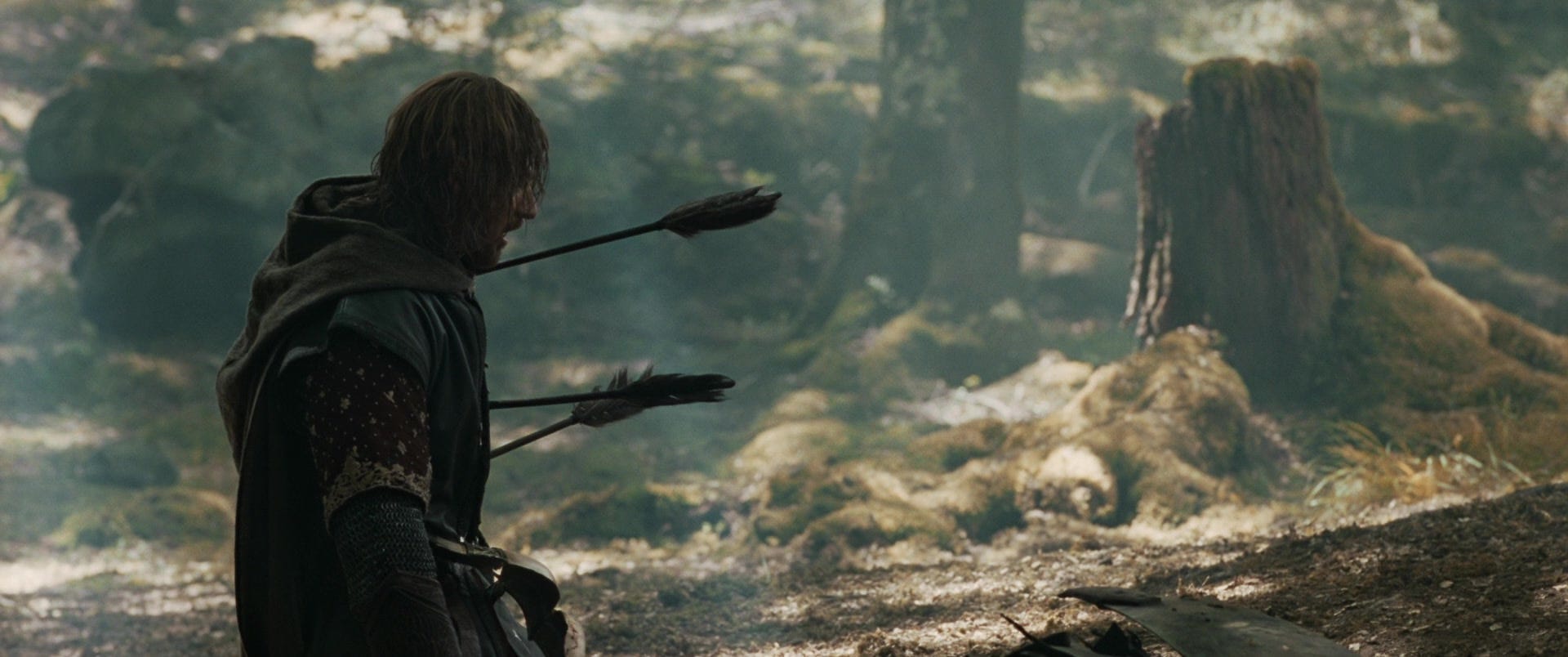
There’s a scene in the Peter Jackson films (extended edition) where the Fellowship is settling in to take a short rest in Lothloríen after meeting the Lady Galadriel. Aragorn spots Boromir sitting off by himself and mistakenly assumes his companion is keeping watch as they’ve had to do when out in the wild. Aragorn attempts to assuage Boromir’s troubled mind by telling him he can take a rest, the borders of Lothloríen are well protected.
However, keeping watch isn’t what’s on Boromir’s mind. In a rare moment of vulnerability, Boromir tells Aragorn that he heard Lady Galadriel’s voice inside his head. She told him, “Even now, there is hope left.” But then he confesses to Aragorn that he cannot see it because it’s been so long since the people of Gondor had any hope. This is what vexes his mind.
What Boromir doesn’t know is that, in that moment, ‘hope’ is with him.
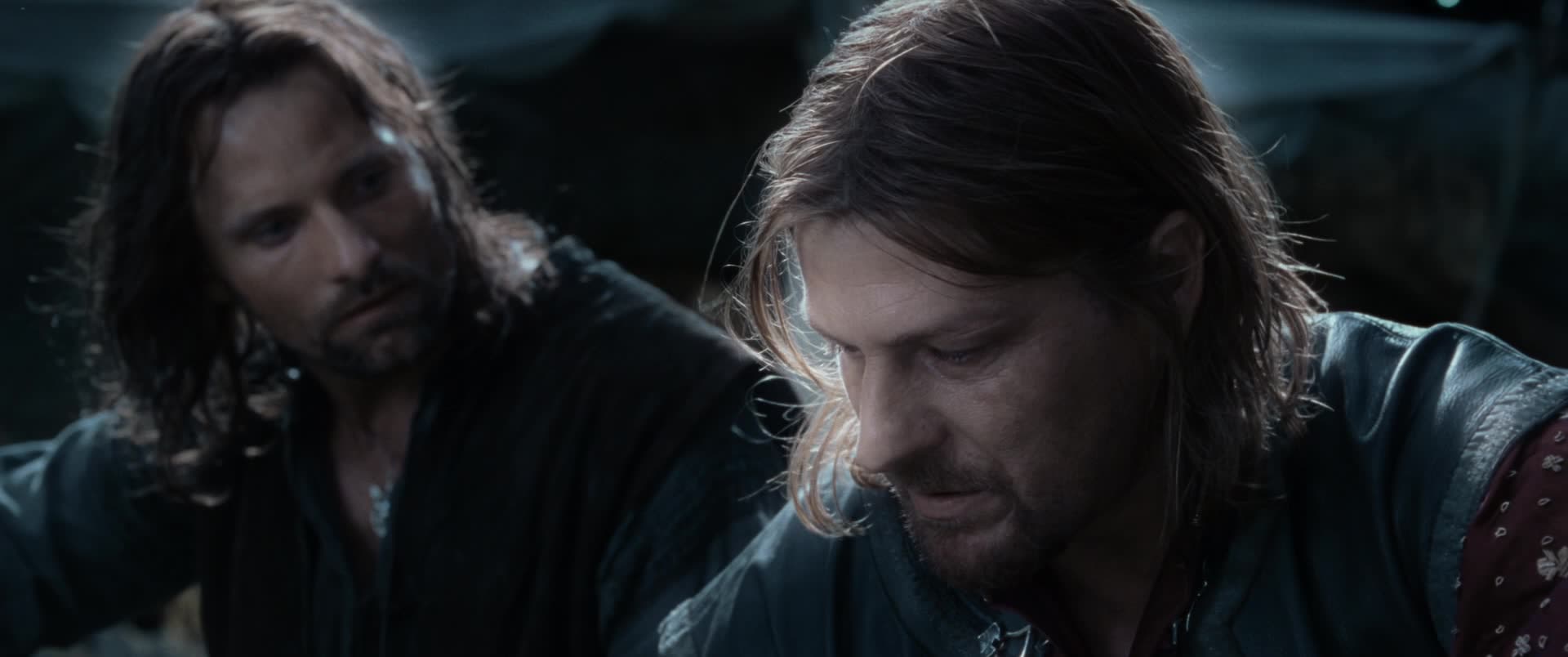
I’m referring to the other person with Boromir in this scene: Aragorn. Or rather, Aragorn as he’s known by one of his other names, Estel.
This name was given to him by his mother, Gilraen, and it roughly translates to ‘hope’. But, as with many things in Tolkien’s legendarium, the meaning of this name goes deeper that just the surface definition of ‘hope’.
To better help me explain this, allow me to refer to a passage from The History of Middle-earth series, specifically the volume, ‘Morgoth’s Ring’. In this book, we read of a conversation between an Elf named, Finrod1, and a Human woman named Andreth.
‘Have ye then no hope?” said Finrod.
‘What is hope?’ she said. ‘An expectation of good, which though uncertain has some foundation in what is known? Then we have none.’
‘That is one thing that Men call “hope”,’ said Finrod. ‘Amdir’ we call it, “looking up”. But there is another which is founded deeper. Estel we call it, that is “trust”. It is not defeated by the ways of the world, for it does not come from experience, but from our nature and first being. If we are indeed the Erubin, the Children of the One, then He will not suffer Himself to be deprived of His own, not by any Enemy, not even by ourselves. This is the last foundation of Estel, which we keep even when we contemplate the End: of all His designs the issue must be for His Children’s joy. Amdir you have not, you say. Does no Estel at all abide?’ —Morgoth’s Ring, Section: Athrabeth Finrod Ah Andreth, J.R.R. Tolkien
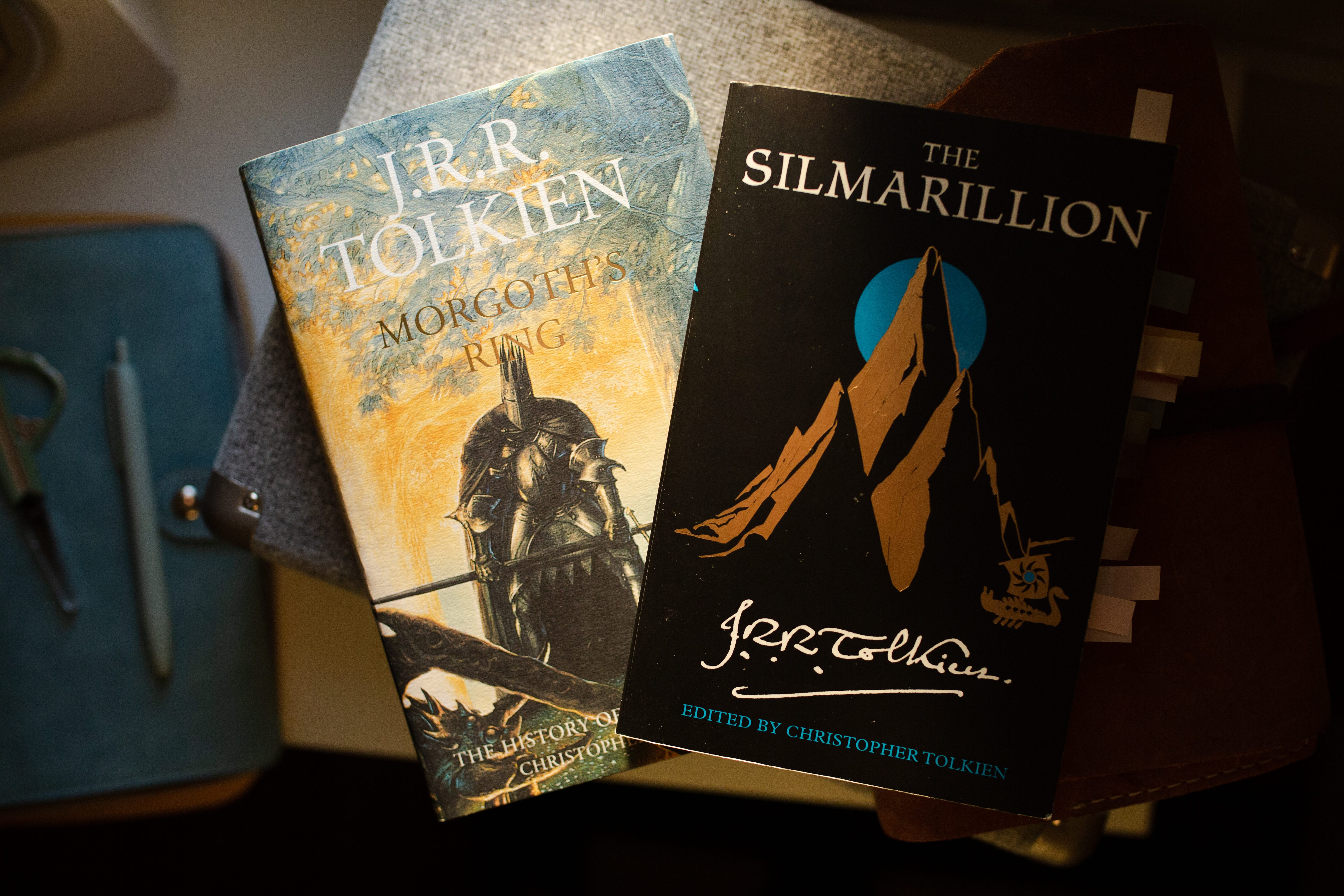
Here Finrod is explaining the concept of ‘estel’ that Tolkien created within his legendarium. This word may translate to ‘hope’ but it’s roots reach further than that. For Tolkien estel was a concept of faith; of trust in a higher power to always be working good into the world despite the very real presence of evil that exists.
This idea also hearkens back to another passage in Tolkien’s writing that we find in The Silmarillion. In the Ainulindalë, we read of Eru Ilúvatar using his music to sing all of creation into existence alongside the Ainur (the powerful spirit beings Eru created). The songs of creation are rich and holy and beautiful until Melkor (one of the Ainur spirits) attempts to introduce his own musical theme that is in opposition to the one Eru is making. Melkor’s discord spreads rapidly and seeks to corrupt the good music. This is how Eru eventually responds:
‘And thou, Melkor, shalt see that no theme may be played that hath not its uttermost source in me, nor can any alter the music in my despite. For he that attempteth this shall prove but mine instrument in the devising of things more wonderful, which he himself hath not imagined.’ —The Silmarillion, Section: Ainulindalë, J.R.R. Tolkien
Here we read again where Tolkien is describing how hope is woven into the very fabric of the fictional world he created. Eru Ilúvatar responded to Melkor’s discord by declaring that no matter what evil he may try to accomplish, in the end, it will become an instrument for good. Redemption.
Then we come back to the Third Age and find the character of Aragorn whose other name is ‘Estel’—a name given to him by his mother when he was taken to be hidden as a child in Rivendell.2 She had faith that this child would one day redeem and heal his people. In faith of a better future, she named him ‘hope’.
But Boromir does not initially recognize Aragorn as his people’s king. He’s skeptical of this Ranger’s claim to the throne. He can’t see beyond the despair that the Gondorian people are so familiar with. Thus, when he confesses to Aragorn that he does not see the hope Galadriel spoke to him of—he doesn’t realize that, all the while, ‘hope’ is sitting beside him.
Of course, Boromir does eventually come to accept Aragorn as his king. After his last stand, he falls and it’s there Aragorn finds him. It’s in this moment that Aragorn, Estel—hope—is with Boromir when he dies.
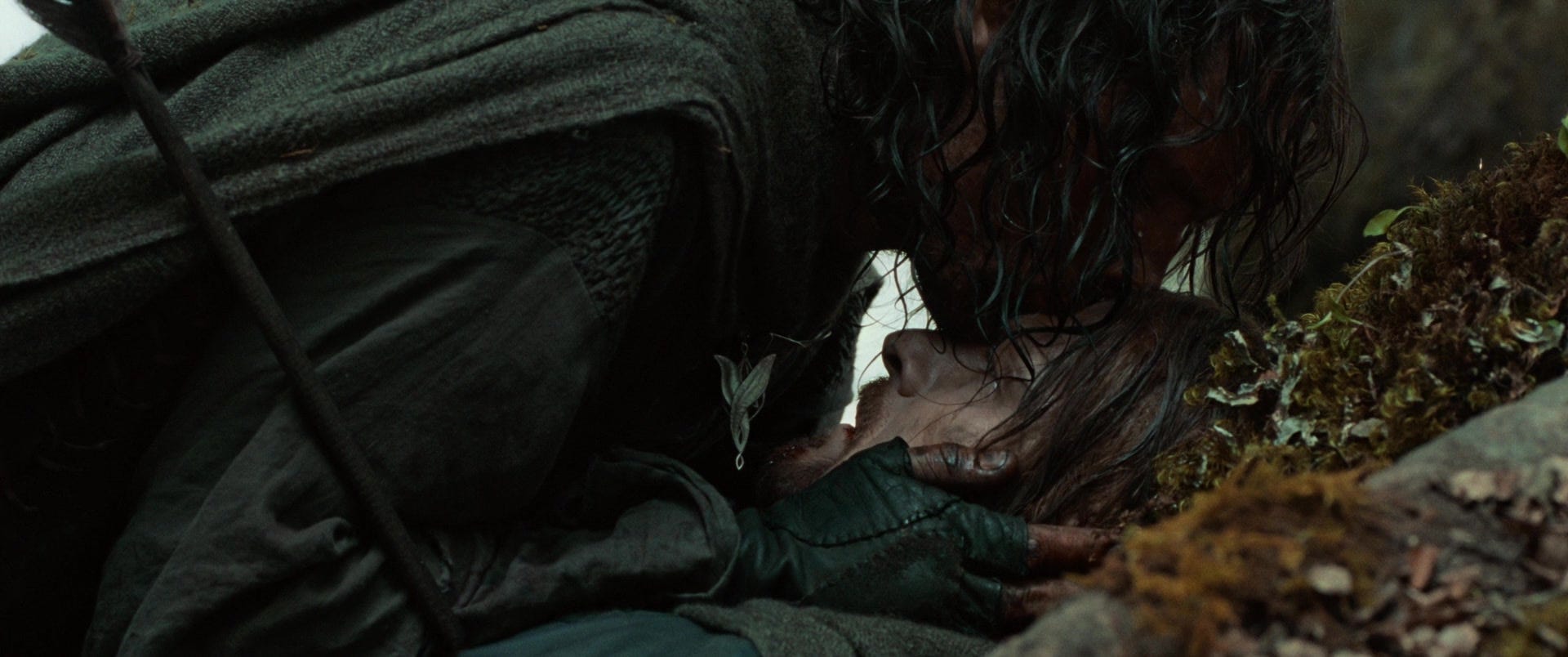
Of all the characters in The Lord of the Rings, Boromir strikes me as one of the most human. He struggles to believe in prophecies and ancient foretellings. He sees things for what they are, not what people claim them to be. He’s blunt and gritty and logical. He wrestles with trusting that good will win while living in the reality of a broken world.
And yet, how beautiful is that, despite Boromir’s struggle to believe in hope, he still chose to do the right thing. He moved without hope as best he knew how until, unexpectedly, Estel came to him—the Hope that had been with him along.
If you enjoy deep dives like this that connect The Lord of the Ring to Tolkien’s greater legendarium and books like The Silmarillion, you might be interested to know that I’m hosting a guided read-through of The Silmarillion for my paid subscribers starting next month on June 14th.3
I’ll be posting more about this upcoming event as we get closer to our start date. You’re welcome to sign up and save your seat now!
For now, I hope you enjoyed this deep dive on the concept of estel in Tolkien’s legendarium and Boromir teaches us to move with hope, even if we can’t see it yet.
Finrod is one of Galadriel’s brothers—another lovely connection within the concept of ‘estel’.
Source: The Lord of the Rings: The Return of the King, Appendix A, “The Númenorean Kings”, “The Tale of Aragorn and Arwen“
Ugggg Brea! I saw online yesterday you said you would make us cry and I was adamant it wouldnt be me. And then dang it if tears did not spring to my eyes with the last sentence of this paragraph:
"And yet, how beautiful is that, despite Boromir’s struggle to believe in hope, he still chose to do the right thing. He moved without hope as best he knew how until, unexpectedly, Estel came to him—the Hope that had been with him along."
What a beautiful insight to be given - now I shall cry even more during this scene🥹. Sean Bean's performance as Boromir is one of the reasons PJ's LOTR: Fellowship of the Ring is my favorite of the three movies in the Trilogy. I have not read the books in a very long time and admit my version of him comes almost entirely from the movies. I am looking forward to rediscovering and exploring him further as a literary character on our Many Meetings read through (after The Silmarillion of course!) ❤️